Problem
Assisted coding can move from plan to code and spend before a human has approved the risky parts.
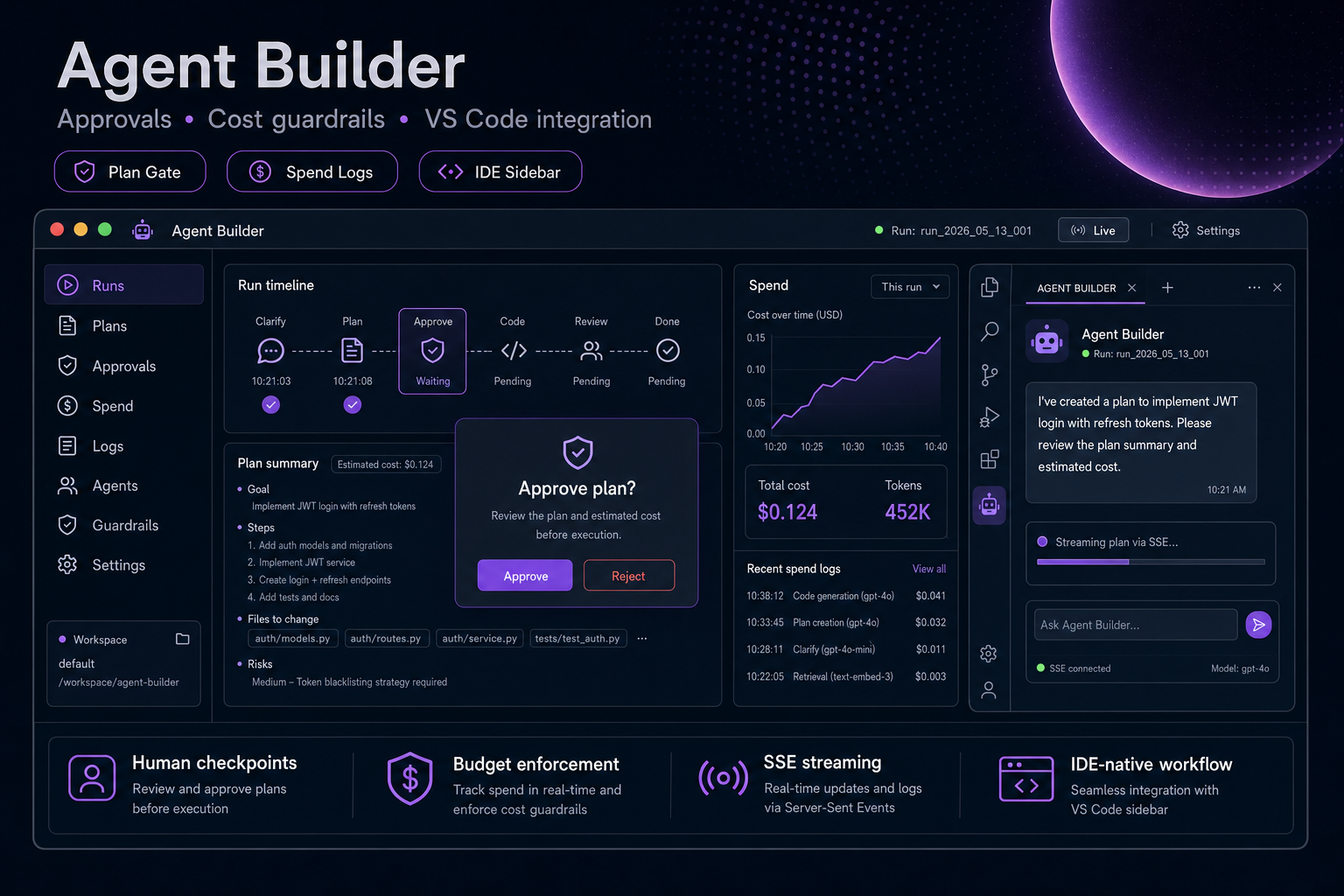
Governed coding-agent experience with approval workflows, live visibility, and an IDE-native interface.
This project explores what it takes to make coding agents usable in real software workflows, where review, control, and accountability matter as much as generation quality.
The product combines an orchestration layer with an IDE experience so developers can start work, inspect progress, and intervene at important checkpoints without leaving their normal environment.
Availability:
Upcoming
Assisted coding can move from plan to code and spend before a human has approved the risky parts.
Plan checkpoints, approval gates, spend logs, and IDE-native operator visibility slow only the steps that need authority.
Developer agents can stay useful while requiring human review at high-risk implementation and cost moments.
Useful when teams want agent-assisted delivery without giving the agent silent permission to execute everything.
Use this pattern to evaluate human gates in an agent-builder workflow.
Send a problem briefBuild a coding-agent workflow that feels trustworthy enough for serious engineering work. The emphasis is on structured execution, human oversight, and clear visibility into what the system is proposing before changes are accepted.
A core design principle is collaboration rather than unattended autonomy. The product is meant to keep a developer in control while still making the agent genuinely useful.
I shaped this as a governed developer product rather than a standalone chatbot, focusing on the workflow between request, review, approval, and final output.
This project shows how coding agents become more practical when orchestration, approval, visibility, and developer experience are designed together instead of added as afterthoughts.