Problem
Multi-agent workflows fail in ways that are hard to coordinate, inspect, or pause once execution is underway.
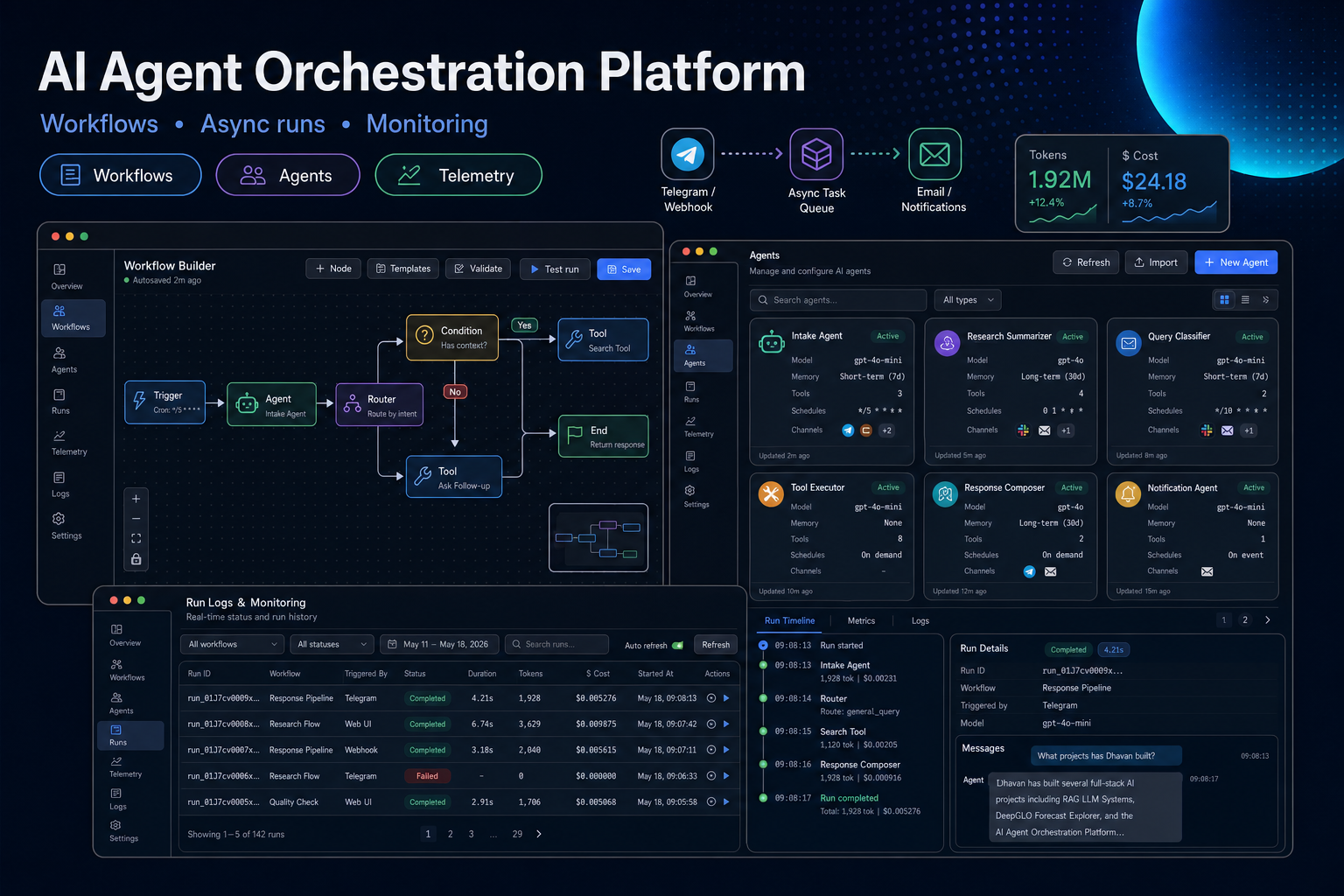
Agent workflow product for designing, running, and observing multi-step AI systems.
This project is a productized orchestration environment for teams building AI workflows that need more than a single prompt-response loop. It brings workflow design, execution control, and monitoring into one surface so multi-step systems can be managed intentionally.
Rather than exposing internal implementation details, this page focuses on the product outcome: a way to define agent-driven processes, run them reliably, and inspect results without treating the system like a black box.
Live demo:
Multi-agent workflows fail in ways that are hard to coordinate, inspect, or pause once execution is underway.
Graph runs, async state, visible execution history, and operator controls make workflow state explicit.
Runtime orchestration needs observable state and control surfaces, not hidden chains of model calls.
Useful for pilots where agents coordinate tools, jobs, and approvals across more than one step.
Use this pattern to scope a controlled workflow-runtime pilot.
Send a problem briefCreate an orchestration product where complex AI work is explicit, observable, and manageable over time. The emphasis is on giving operators and builders confidence in how multi-step systems are composed, launched, and reviewed.
The platform is designed for AI operations that unfold across multiple steps instead of a single response. It supports managed execution, historical traceability, and the visibility teams need when workflows become business-critical.
I designed the product experience around workflow composition, run monitoring, and operational clarity, shaping it as a portfolio example of how AI systems move from isolated prompts to usable software surfaces.
This project demonstrates AI product engineering beyond a single prompt loop: workflow design, execution visibility, reusable agent surfaces, and operational oversight working together as one coherent system.